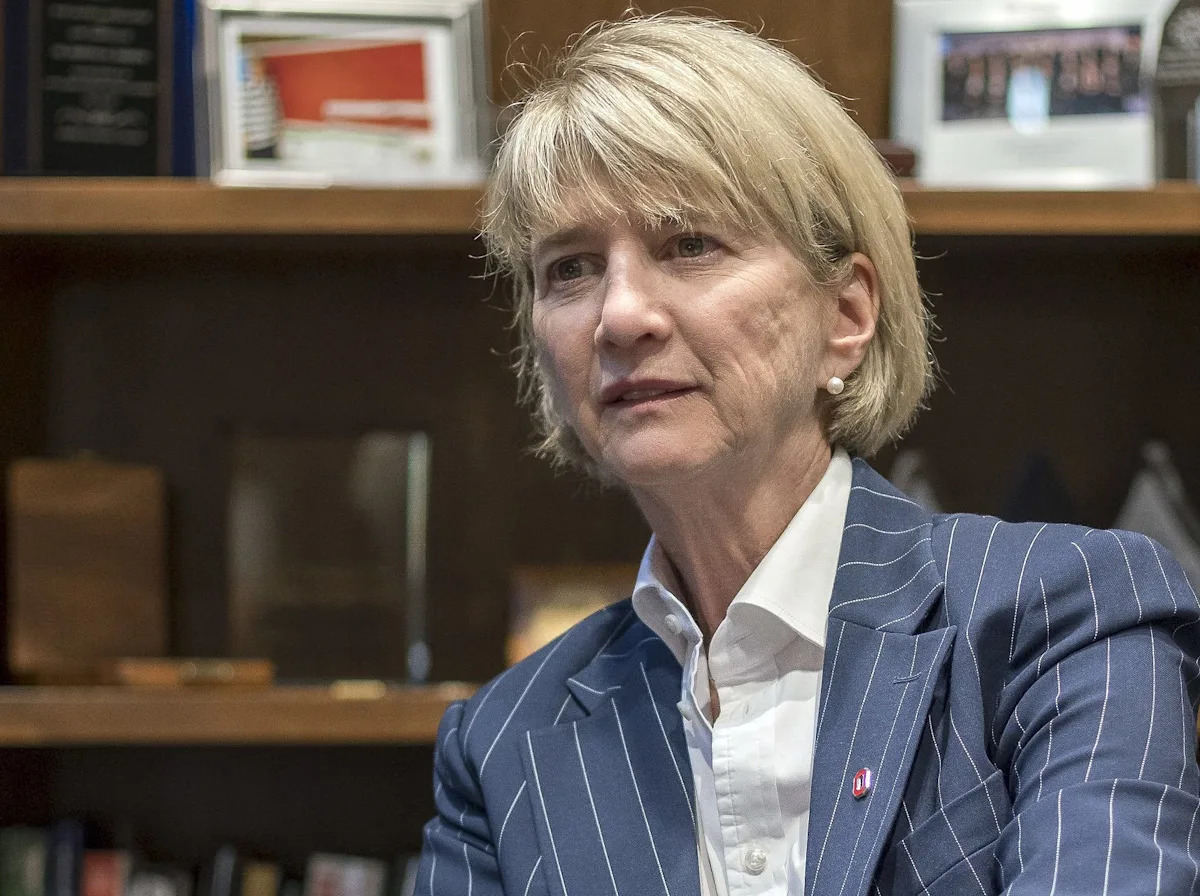
Kristina Johnson Steps Down: The Unexpected Resignation of Ohio State's President Amidst Employee Probe
In a development that has sent ripples through the academic community, Ohio State University President Kristina Johnson is set to announce her resignation, effective at the end of the academic year. The decision follows a request from the university’s board of trustees, sparked by a series of complaints from school employees. While the precise nature of these complaints remains officially undisclosed, sources indicate that an external firm was engaged to investigate the concerns, pointing to a potentially contentious internal climate as the catalyst for the ohio state president resigns news. This abrupt departure marks a significant moment for one of the nation's largest and most prominent public universities, raising questions about leadership, accountability, and the intricate dynamics of university governance.
The news of President Johnson's impending exit arrived with little precursor for the public, though internal discussions had evidently been underway. University officials have, so far, maintained a tight lip, with a spokesman declining to comment as the story first broke. This silence, while perhaps strategic, only fueled speculation among faculty, staff, students, and alumni. The resignation of a university president, particularly under such circumstances, inevitably prompts a deep dive into the underlying issues, the institution's culture, and the board's oversight responsibilities. It highlights the immense pressure and scrutiny faced by leaders of major academic institutions, where balancing academic excellence, financial stewardship, public relations, and internal employee satisfaction is a constant, delicate act.
The Catalyst: Unpacking the Employee Probe and its Significance
The core reason behind President Johnson's resignation, as reported, stems from an employee probe initiated after complaints from school employees. While specific details are scarce, such investigations typically delve into allegations of workplace misconduct, leadership style concerns, communication issues, or broader cultural problems within an organization. For a massive institution like Ohio State University, with tens of thousands of employees, maintaining a healthy and productive work environment is a monumental task, and any widespread dissatisfaction among staff can severely impact operations and morale.
An external firm being brought in to investigate suggests the gravity of the complaints. This move often signifies that internal HR processes were either deemed insufficient or that the issues were too sensitive, potentially involving high-level individuals, to be handled solely in-house. The board of trustees, as the ultimate governing body, has a fiduciary duty to ensure the well-being of the university and its constituents, including its employees. Their request for President Johnson's resignation underscores their commitment to addressing these concerns seriously, even if it means a change at the very top.
Practical Insights: For any large organization, especially a university, fostering a positive workplace culture is paramount. This includes:
- Clear Communication Channels: Ensuring employees feel heard and have avenues to voice concerns without fear of reprisal.
- Transparent Leadership: Leaders who communicate openly and consistently build trust.
- Accountability at All Levels: Holding leaders and staff accountable for their actions and behaviors.
- Conflict Resolution Mechanisms: Robust systems to mediate disputes and address grievances fairly.
- Regular Feedback and Engagement: Surveys, town halls, and one-on-one meetings to gauge employee sentiment.
The situation at Ohio State serves as a stark reminder that even highly accomplished leaders can face challenges in managing vast, complex workforces, and that employee satisfaction is a critical metric of institutional health.
A Recurring Narrative: OSU's History of Presidential Transitions
For Ohio State University, a high-profile presidential departure isn't an entirely new phenomenon. This latest development follows other significant changes in leadership, perhaps none more memorable than the previous resignation of beloved President E. Gordon Gee. Gee, a charismatic and popular figure, announced his retirement in 2013 amidst a firestorm of controversy surrounding off-the-cuff remarks he made criticizing the University of Notre Dame and Catholics.
Gee's comments, made at an OSU athletic council meeting, included offensive remarks about "those damn Catholics" at Notre Dame, questioning their trustworthiness. He also took aim at the SEC, playfully but pointedly suggesting they "learn to read and write" before critiquing the Big Ten's size. While Gee's public persona was often one of a genial, bow-tied figure, these comments crossed a line, drawing widespread condemnation and ultimately leading to his departure. His resignation statement, while acknowledging his love for the university, came on the heels of intense public and internal pressure.
The contrasts between Gee's and Johnson's situations are striking. Gee's resignation stemmed from highly publicized gaffes and external outrage. His tenure was also notable for his high compensation, reported at $2.1 million annually, and significant expenses—around $7.7 million over several years—on travel, entertainment, and maintaining a lavish presidential mansion. Kristina Johnson's departure, however, appears to be rooted in internal dissatisfaction and a confidential employee probe, highlighting a different facet of leadership challenges. This isn't the first time the Ohio State President has resigned over controversial remarks, as evidenced by the departure of E. Gordon Gee. For a deeper dive into the historical context of leadership changes at OSU, exploring everything from Gee's public gaffes to the current situation, readers can refer to Ohio State's Presidential Exits: From Gee's Gaffes to Johnson's Probe.
Navigating the Future: Implications for Ohio State and University Leadership
The resignation of President Johnson undoubtedly initiates a significant period of transition for Ohio State University. The search for a new president is a complex and lengthy process, requiring careful consideration of a candidate's academic credentials, fundraising prowess, administrative experience, and—critically in light of recent events—their ability to foster a positive and inclusive internal culture. The board of trustees will likely prioritize a leader with strong communication skills and a proven track record of effective employee relations and transparent governance.
This event also serves as a broader lesson for university leadership across the nation. Presidents of major universities are often expected to be all things to all people: visionary academics, prolific fundraisers, astute business managers, public relations mavens, and compassionate community leaders. The demands are immense, and the spotlight is constant. The Ohio State scenario underscores that internal dynamics and employee well-being are just as crucial as external perception and financial performance.
Actionable Advice for University Boards:
- Proactive Governance: Don't wait for crises; regularly assess leadership effectiveness and organizational health.
- Clear Expectations: Define clear performance metrics for presidents, including those related to workplace culture and employee engagement.
- Confidential Reporting Mechanisms: Ensure robust and trusted channels for employees to report concerns.
- Support for Leadership: Provide presidents with the necessary resources and support to manage complex institutions effectively, including coaching on communication and conflict resolution.
- Succession Planning: Always have a contingency plan and a well-defined process for leadership transitions.
Conclusion
The impending resignation of President Kristina Johnson marks a pivotal moment for Ohio State University. While the full details of the employee probe remain under wraps, the fact that an internal investigation precipitated this change underscores the critical importance of workplace culture and leadership accountability in even the highest echelons of academia. As Ohio State begins its search for a new leader, the university community will undoubtedly be looking for a president who can not only advance its academic mission and secure its financial future but also build a cohesive, respected, and positive environment for all its employees. This incident reiterates that for any ohio state president resigns scenario, the underlying reasons often reveal profound insights into the challenges of modern institutional leadership.